By Anne Mazar
There is more wildlife in Mendon’s woods and fields than you might think. Most animals are skittish and do not want to be around humans, but they are out there and play an important role for our ecosystem and in turn us.
Jen and John Rausch, have been proud barred owl “parents” since 2021, when they put up an owl box high up in a tree facing the morning sun. They installed a camera in the nesting box so they could see the brood hatching and fledging. Barred owls mate for life. Some years the mom lays one, two or three eggs. She sleeps on her eggs during the day and the dad stays perched in a nearby tree on guard. Occasionally during the day, they will be out looking for food. They love to eat small rodents, keeping this population at a healthy level. John and Jen admire all the wildlife that go through their wooded backyard.
When asked about why there seem to be so much wildlife in her yard, Jen said, “You have it. They are there. You just have to slow down and appreciate what is around you.” One year, after a trio of owl siblings fledged, their neighbor snapped a photo of them sitting on the basketball backboard in their yard hanging out together.

Jen pointed out that rat poison used to kill rodents will also kill the owls and hawks that eat them, so they should be avoided, if possible.
When Barry Iadarola hunts, he spends three and a half hours at a time in a tree stand and can observe the wildlife. He has seen deer, fishers, turkeys, pileated woodpeckers, gray and red foxes, along with the more common chipmunks, rabbits, beavers, racoons and opossums. One evening, as Barry was coming down from his tree stand, a group of coyotes were calling from different directions around him communicating to one another. I asked if he was scared, he said, “No, I recorded it. I replay the recording sometimes at night, because it was so primal.” Most animals will not attack humans unless they are provoked, cornered, or habituated.
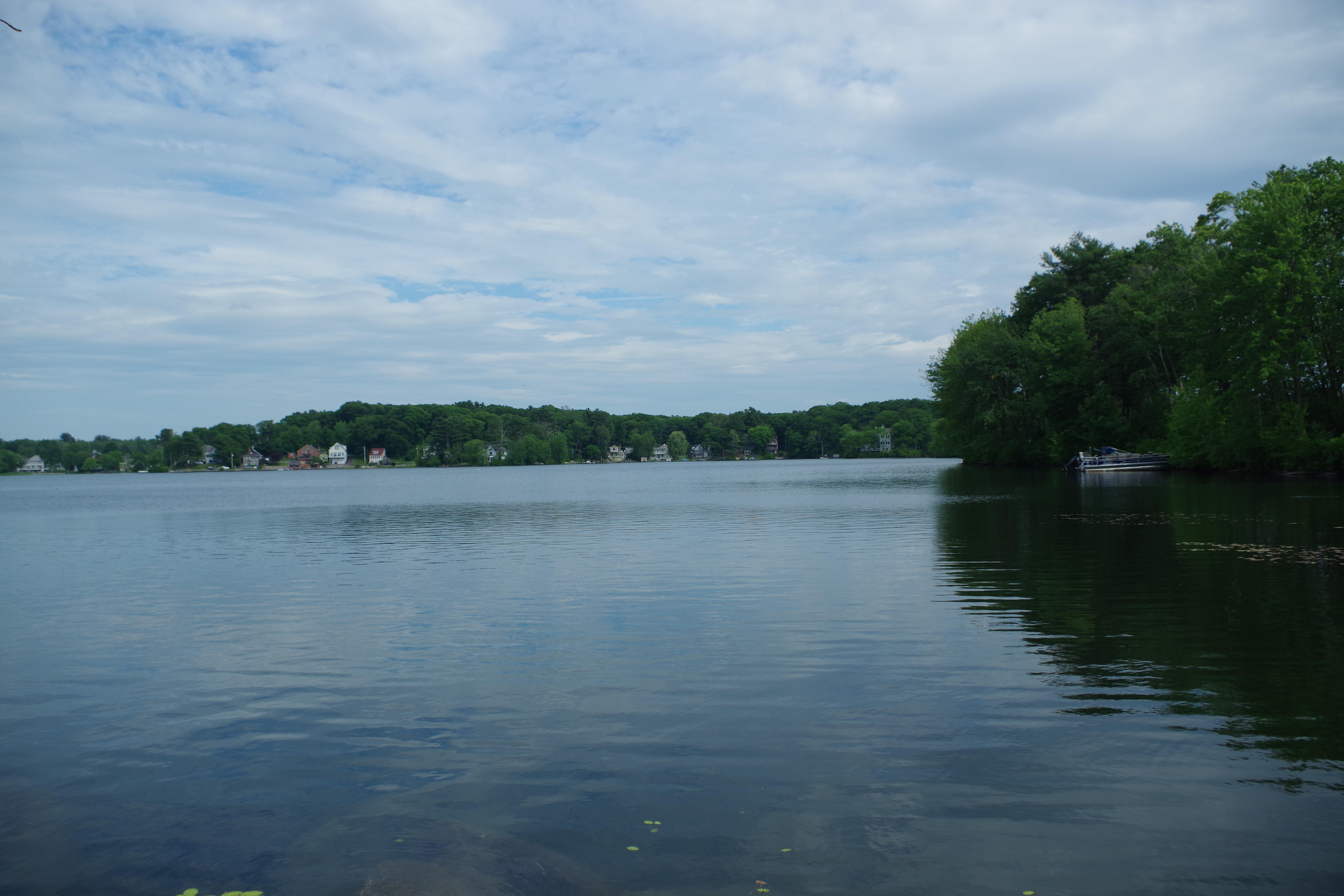
Carole Carnovale lives on Lake Nipmuc and admires the wildlife that passes by her lakeside home. Carole has seen unusual animals, she said, “Once there were 52 snow geese on the ice for about one hour.” More often she sees bald eagles, great blue herons, various ducks, and has also seen otters. Carole is concerned when the waterfowl are fed bread, crackers, chips, popcorn and other snacks because these offer no nutritional value and can cause “angel wing” deformity, obesity, and malnutrition. It can also add nitrogen and phosphorus to the water that can lead to polluting the waterway. It is best to let them eat natural sources of food and just embrace their presence.
Other wildlife in Mendon include bobcats, spring peepers, marbled salamander, bats, American ermine and many bird species. The easy-to-use free Merlin App can listen to your soundscape and let you know what birds are in your yard — you might be surprised.

Some claim to have seen bears in Mendon. My neighbor had a huge pile of scat in her front yard that was not a cowpie or horse manure and it looked like bear scat when she compared it to photos online.
Each animal has a role to play in our ecosystem. When an ecosystem is healthy, coyotes, foxes and raptors keep the rodent and rabbit population in check. Opossum, skunks, racoons and birds eat grubs, ticks and other unwanted insects. Bats, birds and dragonflies eat mosquitoes. With the exception of birdfeeders, wild animals should not be fed by humans. Animals can become aggressive to humans if they expect to be fed, and it can be detrimental to the animals’ survival.
We can appreciate the animals around us and treasure the current spring chorus of birds, but also be aware that many species are in decline. To help, we can plant native vegetation to feed animals, birds and pollinators. We should avoid clearcutting when building, find alternatives to pesticide/herbicide use and support land conservation to give wildlife a home.
Let us know what you have observed. If you have a camera that captures photos of wild animals or if you have questions or ideas, submit them to the Mendon Commons by filling out this form.
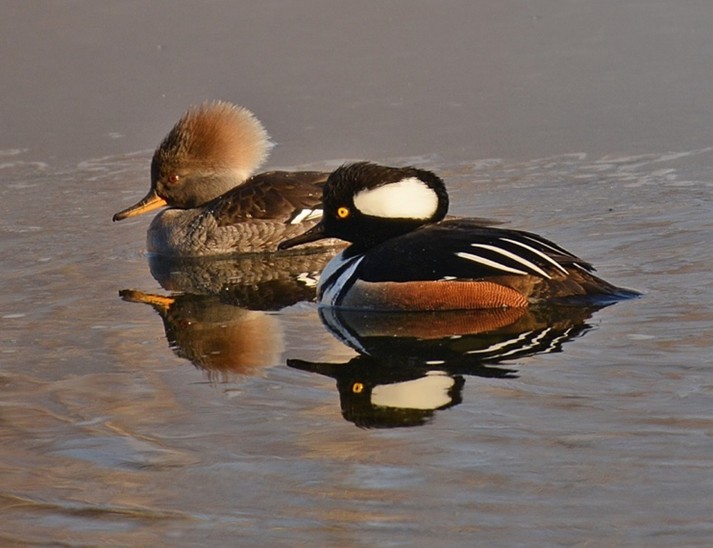
Photo at top: Hooded mergansers on Lake Nipmuc (photo courtesy of Carole Carnovale).
Below: A mallard duck and ducklings on Lake Nipmuc (photo courtesy of Carole Carnovale); an American ermine or American Stoat (photo courtesy of Lea Botta-Whiting); a barred owl fledgling (photo courtesy of Jennifer Rausch); fledgling barred owls (photo courtesy of Jennifer Rausch).